
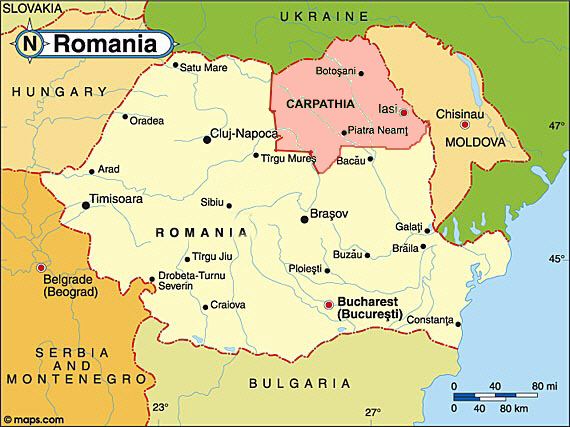
The Barony of Carpathia is a small landlocked country sandwiched between Ukraine, Moldova and Rumania that exemplifies the chaotic turmoil in Eastern Europe during much of its history. It has been a playground of various empires, but it has recently emerged from that history as a fully independent state.
The first mentions of this territory as an independent region come from manuscripts of Orthodox monks, calling it “a land of witches, where pagans dwell among the pious.” A couple of centuries later, invaded by the infamous Vlad Tepes, it became a part of Transylvania, and later, Hungary. At that time, it was famously called “the most cursed domain in a cursed kingdom,” but this didn’t stop the Ottoman Empire from absorbing it. Eventually, Carpathia came under the rule of the Austro-Hungarian crown as a semi-independent barony. The new baron was a Poul Sylvestri though popular support was retained by his estranged wife and the hereditary ruler of the region, Natasha Sylvestri von Ruthenia (Great Grandmother of the current Baroness).
As the empires crumbled, The Sylvestri family installed themselves as the monarch of a newly emerged, independent Carpathia-Ruthenia (which originally included much of Northern Moldova).
Later the fascist National Movement took over the running of the government— though in reality she ran the country from behind the scenes, preferring to transfer all the blame and responsibility to pro-Nazi puppets.
Eventually, Carpathia-Ruthenia joined World War II as an Axis state. This made the small nation an enemy of the Allies, particularly the Russian army.
After the war, the state was in ruins—the previous leaders were dead or escaped in the chase, the economy was in shambles, and various ethnic groups were at each other’s throats. One of Russia’s front line heroes, Kamehn (The Stone Bogatyr) worked relentlessly to maintain a semblance of peace in the region. In the end the country joined the Soviet bloc as a puppet republic.
After the Autumn of Nations in 1989, when the rest of Eastern Europe overthrew the Soviet system, sometimes violently, sometimes peacefully, the region remained Communist. Although, the region to the East seceded and formed part of the independent nation of Moldova. In the rest of the state (now known only as Carpathia) the Carpathian Communist Party remained in power until the 1990s.
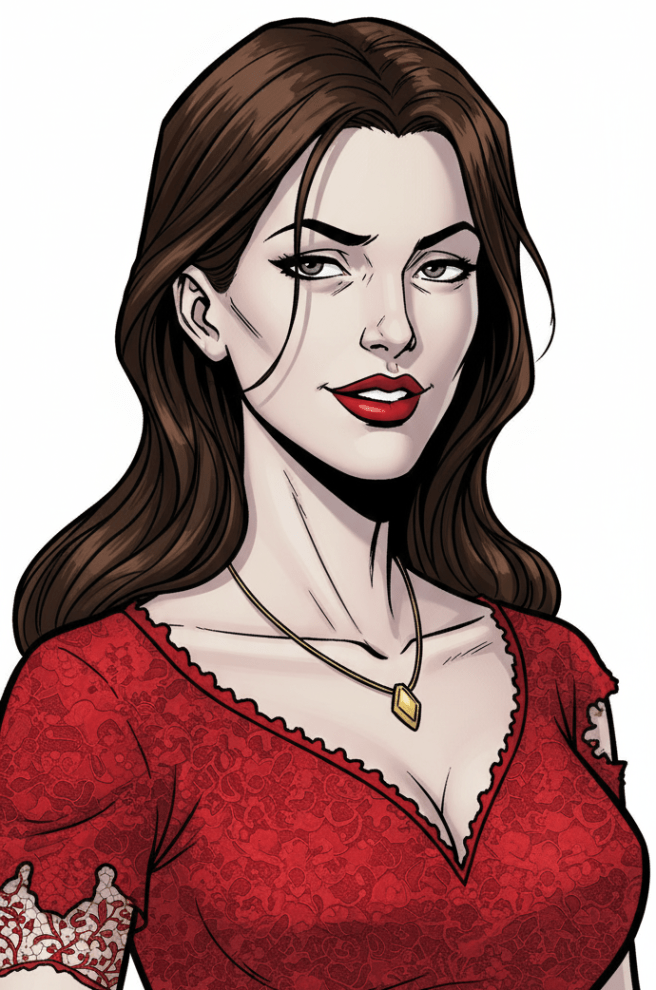
The Baroness Natasha Sylvestri von Ruthenia eventually claimed leadership of the country publicly after years hidden in exile. She formed a new government, and Carpathia took a firmly pro-Western course.

 Growing up Meta, UK-Style!